

Type 2 diabetes
Type 2 diabetes means your body can’t control the amount of glucose (sugar) in your blood. Your body might not respond properly to a hormone called insulin. Or your body doesn’t produce enough insulin. Either way, your blood glucose (blood sugar) level becomes too high.
About type 2 diabetes
There are two main types of diabetes: type 1 and type 2. Type 2 diabetes is the most common. Around 9 out of 10 people diagnosed with diabetes have this type.
You can develop type 2 diabetes at any age. It’s more common the older you get. But it’s becoming more common in young adults and children.
With type 2 diabetes, your body stops responding properly to insulin. You may also not be able to produce enough insulin. Insulin controls the amount of glucose (sugar) in your blood. When you need energy, it helps glucose move from your blood into your body tissues. If your body doesn’t respond to insulin properly, your blood glucose level can become too high.
Type 2 diabetes risk factors
Several things can increase your risk of developing type 2 diabetes. The main one is if you’re overweight or obese.
Other type 2 diabetes risk factors include:
- a lack of physical activity
- having a close family member with diabetes
- if you’re of African, African–Caribbean, or Asian ethnicity
- getting older
- high blood pressure or high cholesterol
- polycystic ovary syndrome
- diabetes during pregnancy (gestational diabetes)
- smoking
Symptoms of type 2 diabetes
Type 2 diabetes may not cause any obvious symptoms. It may only be discovered during a routine medical check-up. If you do have type 2 diabetes symptoms , you may:
- need to pee more often than usual
- feel constantly thirsty
- lose weight for no obvious reason
- feel extremely tired
- have blurred vision
- get infections often that affect your skin or genitals – for example, thrush – or urinary tract infections
- have tingling or numb hands or feet
- develop darker patches in skin folds, such as your neck and armpits
If you have any of these symptoms, book an appointment with your GP.
Diagnosis of type 2 diabetes
Your GP will ask about your symptoms and examine you. You may have a blood test to check your blood glucose (blood sugar) level. You might have to fast (not eat) before your blood test, and you may need to be tested a couple of times. Sometimes, you may need further blood tests to check whether you have type 1 or type 2 diabetes.
You may find you have prediabetes. This is a warning sign and means you’re at high risk of diabetes. This means your glucose levels are higher than normal, but not high enough for a diagnosis of type 2 diabetes. There are things you can do that may prevent or delay type 2 diabetes. For more information, see our section on preventing diabetes.
Managing type 2 diabetes
Your GP will put a care plan in place for you. Type 2 diabetes treatment will usually involve lifestyle changes and type 2 diabetes medication . They’ll talk through everything you need to know about living with diabetes and how to manage it.
Your GP may also refer you to a group education programme, such as the DESMOND (Diabetes Education for Self-Management for Ongoing and Newly Diagnosed) programme. This will help you learn about diabetes and how to manage your care.
Lifestyle changes
There are many things you can do to help control your blood glucose (blood sugar). These include
- making changes to your diet
- losing weight if necessary
- being more physically active
Your nurse or dietitian will talk you through this. For some people, these changes may be enough to control diabetes. It may be possible to even reverse type 2 diabetes and put it into remission with lifestyle changes. Remission means your blood sugar levels are normal.
So if you’re overweight, the first thing your GP is likely to recommend is to lose weight. They’ll help you set a target weight to work towards. They may refer you to a dietitian, who can advise on weight management, as well as on controlling your blood sugar.
Diet
Doctors don’t recommended foods specifically made for people with diabetes. It’s more important to follow a normal, healthy, balanced diet, which includes wholegrain foods and plenty of fruit and vegetables.
Wholegrain carbohydrates have a low glycaemic index (GI). GI measures how quickly foods increase your blood sugar. Wholegrain foods are also high in fibre, which helps to slow down sugar absorption. It may help further reduce the glucose load after a meal if you add protein to carbohydrates. For example, add peanut butter to granary toast. Foods with a low GI raise your blood sugar level slowly. There’s good evidence that a low GI diet can help to control blood sugar levels in type 2 diabetes.
Also pay attention to portion sizes of foods that contain carbohydrate. If you eat large quantities of a relatively low GI carb, it will still push up your blood sugar.
If you have type 2 diabetes, you’re at increased risk of heart disease. So it’s a good idea to cut down on salt too.
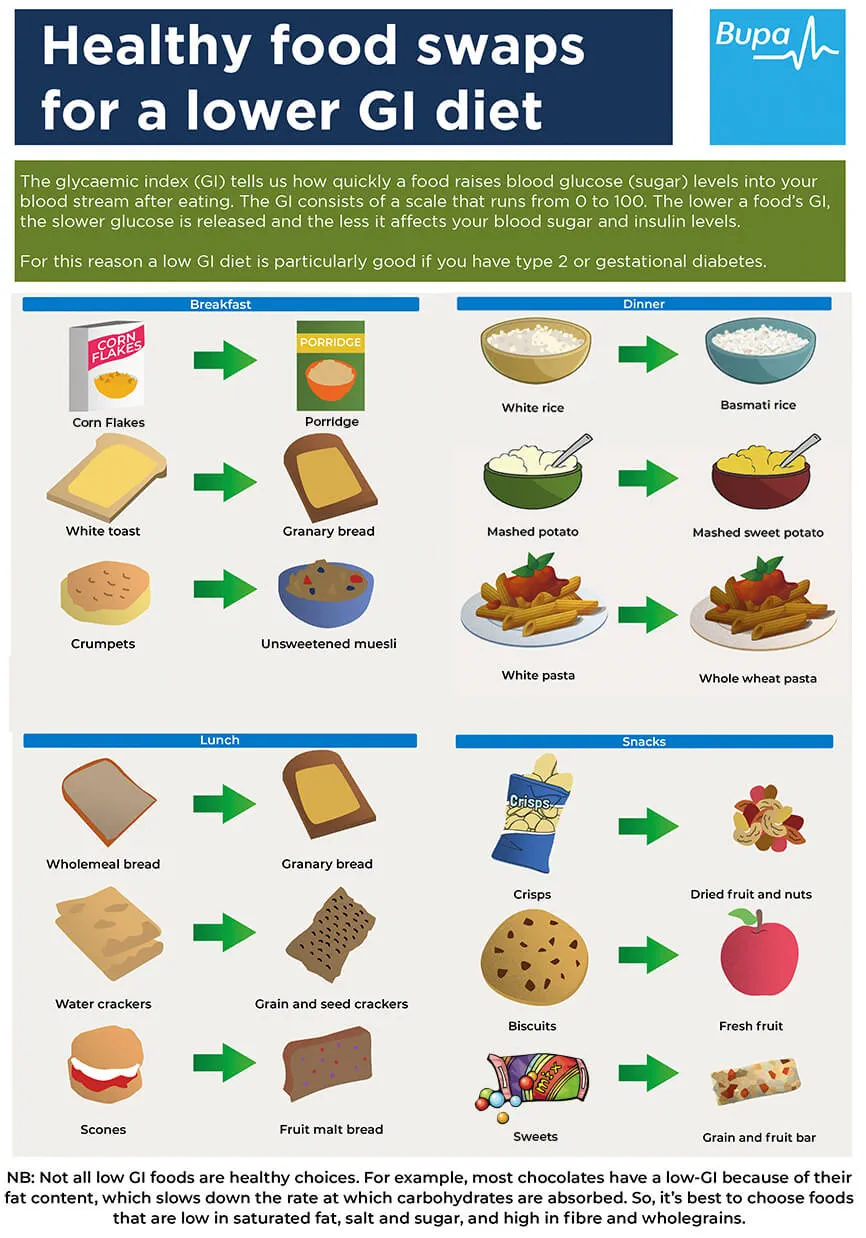
Infographic: Healthy food swaps for a lower GI diet
The following infographic shows us some examples of healthy food swaps for a lower glycaemic (GI) diet. You can click on the image below to download a larger version of the infographic (JPG, 0.15 MB)
The Mediterranean diet has been shown to help both prevent, and control, type 2 diabetes. It includes lots of:
- wholegrains
- fruit and vegetables
- pulses
- nuts and seeds
- virgin olive oil
- fish or seafood (at least twice a week)
- poultry
- eggs
- dairy products
Red meat and sugary foods are eaten less often.
A low-carbohydrate (low-carb) diet can be an option for some people with type 2 diabetes. It may help you to lose weight and manage your blood sugar. But it may not be suitable for everyone, so talk to a dietitian before you try it.
Physical activity
Regular physical activity can help to lower your blood sugar. It can help you to stay a healthy weight and lower your risk of heart disease and stroke (cardiovascular disease).
When you’re getting started with exercise , any amount will help – even just spending less time sitting down as a first step. But to get the full benefits of exercise, try to aim for the recommended levels for adults in the UK, which are:
- 2.5 hours (150 minutes) a week of moderate-intensity activities or
- 1.25 hours (75 minutes) a week of vigorous-intensity activities
- strength training at least two days per week
You can do some of each to make up your weekly exercise and you don’t have to do it all at once. Moderate intensity exercise includes brisk walking, heavy housework such as vacuuming or washing windows, mowing the lawn or light cycling. Vigorous exercise includes jogging, fast cycling, hiking or playing sports such as football, basketball or tennis.
Your doctor, nurse or dietitian can advise you about any adjustments you need to make to your medications or diet when you exercise.
Medicines
Your doctor may recommend type 2 diabetes medicines if lifestyle changes alone don’t control your blood sugar.
You usually have a medicine called metformin. You start with a low dose and gradually increase it over a few weeks. This lowers the risk of side-effects, such as sickness and diarrhoea. If you do get side-effects, they usually go away on their own as you get used to the medicine.
Your doctor will suggest other type 2 diabetes medication , such as pioglitazone, if metformin doesn’t help, or if you get bad side-effects. You may need to take more than one diabetes medication at a time, such as what’s called a sodium-glucose cotransporter-2 inhibitor (SGLT2i) or a GLP-1 agonist. These medicines include semaglutide (Ozempic) and tirzepatide (Mounjaro), which are GLP-1 receptor agonists that you have as weekly injections. These medicines can also help reduce your risk of cardiovascular disease as well as improve your glucose levels and help you lose weight.
You only usually have insulin for type 2 diabetes if lifestyle changes and medicines don’t control your blood sugar. You have insulin as injections, from once, to several times a day, depending on your needs.
Insulin can cause your blood sugar to drop too far (a hypo). So if you take this, you’ll need to monitor your blood sugar with a glucose meter. Your doctor will advise on how often you need to do this.
Complications of type 2 diabetes
If your blood glucose (blood sugar) becomes either too high (hyperglycaemia) or too low (hypoglycaemia), it can cause type 2 diabetes complications.
High blood sugar (hyperglycaemia)
With type 2 diabetes, your blood sugar doesn’t usually become high enough to cause noticeable symptoms. Very rarely, it can rise to a dangerously high level. This is a medical emergency, so it’s always important to be aware of the symptoms of high blood sugar.
If you do have high blood sugar, you may feel more thirsty than usual, need to pee more often and feel extremely tired. You may also feel sick. If your blood sugar continues to rise, you may become confused and drowsy.
In the long term, it’s very important to try and control your blood sugar as well as possible. Your doctor will monitor it every few months with a blood test called HbA1c. This will show how well blood glucose levels have been controlled over the past two or three months.
If your blood sugar is too high for too much of the time, it can lead to problems. These happen because the high sugar levels in your blood can damage nerves and small blood vessels. Problems include:
- kidney disease
- nerve damage, that causes tingling, burning sensations or a loss of feeling, most often in the feet, which can increase your risk of foot ulcers
- eye damage, potentially leading to blindness
- heart disease and stroke
- foot problems, including infections, ulcers and problems related to lack of blood flow
- infections that are frequent or don’t go away, especially urinary and skin infections
These are serious problems and some can be life threatening. Nerve problems and lack of blood flow can even lead to toe, foot or lower limb amputations, particularly in people with diabetes who smoke.
Hypoglycaemia
Hypoglycaemia (also known as a ‘hypo’), is when your blood sugar level becomes too low. It’s a possible complication of some type 2 diabetes treatments – including insulin.
You’re more likely to have a hypo if you are on these type 2 diabetes treatments and:
- skip a meal
- misjudge the amount of carbohydrate you need
- drink alcohol on an empty stomach
- are more active than usual
Most people get warning signs when their blood sugar begins to fall. These include:
- feeling hungry
- sweating
- feeling your heart pounding
- feeling anxious or irritable
- tingling lips
- feeling shaky
If your blood sugar continues to fall, you may start feeling dizzy or confused, weak and lethargic and develop blurred vision.
Hypoglycaemia can be dangerous if not dealt with quickly. If you’re taking diabetes treatment where this might be a problem, your nurse or doctor will give you more information about how to manage hypos.
Living with type 2 diabetes
A healthy lifestyle can help to reduce your risk of long-term complications from type 2 diabetes. This means eating a healthy, balanced diet and doing regular physical activity, as recommended by your doctor, diabetes specialist nurse or dietitian. This will help to control your blood glucose (blood sugar), keep to a healthy weight and reduce your risk of heart disease and stroke.
If you smoke, try to stop. Smoking is unhealthy for everyone, but it's particularly bad if you have diabetes. It further increases your risk of circulatory problems, heart disease and stroke.
If you drink alcohol, stick within the recommended limit of no more than 14 units a week, spread over several days. Don’t drink on an empty stomach – it can increase your risk of a hypo. Alcohol can also increase the risk of hypoglycaemia if you take insulin or other diabetes drugs.
You’ll have check-ups with your doctor around every six months. This is to check that your blood sugar is well controlled and to check for complications. You’ll have an HbA1C blood test to check how well your diabetes is controlled. And you’ll have other checks for diabetes complications, including blood tests (for cholesterol and kidney function), blood pressure, and eye and foot examinations. This will help to pick up any complications early, so they can be treated.
Driving
You don’t need to let the Driver and Vehicle Licensing Agency (DVLA) know you have type 2 diabetes unless:
- you take insulin
- you have any complications
Complications include episodes of hypoglycaemia, eye problems or nerve damage to your legs or feet. The DVLA may contact your doctor for more information.
There’s more information on DVLA website.
Your sex life
Over time, high blood glucose levels can damage your nerves (known as neuropathy) and blood vessels. This can restrict blood flowing to your sexual organs causing erectile dysfunction in men and loss of sensation in women. Erectile dysfunction is more common if you’re very overweight (obese) or have high blood pressure or high cholesterol. If you’re having sexual problems, contact your GP for help and advice.
Prevention of diabetes
Type 2 diabetes is preventable. On average, you can halve your risk by improving your diet, losing weight if necessary and doing more physical activity. This is particularly important if you:
- are from a South Asian, Chinese, Black African or African–Caribbean background
- have a close relative with diabetes
- are over 40 (or over 25 if you are from one of the ethnic groups listed above)
- are overweight
- have high blood pressure
You may be diagnosed with prediabetes through a routine blood test. This means you have higher glucose levels than normal, but not yet type 2 diabetes. Your doctor will refer you to a diabetes prevention programme, to help you adopt a healthier lifestyle. If you lose weight, improve your diet and exercise more, it may delay or even stop type 2 diabetes from developing at all.
Worried about diabetes?
Get a picture of your current health and potential future health risks with one of our health assessments.
To book or to make an enquiry, call us on 0370 218 8122
There isn’t a cure for type 2 diabetes. But some people manage to get it into remission with lifestyle changes. Remission means your blood sugar level is within the normal range. But you’ll still have to take care because type 2 diabetes can come back.
See our section on managing type 2 diabetes for more information.
The main cause of type 2 diabetes is being overweight or obese. But some people are at greater risk. Type 2 diabetes is more common in people from a South Asian, Chinese, Black African or African–Caribbean background. It also becomes more common with age.
See our section on causes of type 2 diabetes for more information.
Type 2 diabetes can be serious but if you manage your condition well, you should be able to live a normal life. There are potential long-term complications of type 2 diabetes so it’s important to make changes to your lifestyle and take medicines if necessary as early as possible.
For more information, see our section on managing type 2 diabetes.
For some people, lifestyle changes, such as losing excess weight, may be enough to control diabetes. It might even be possible to reverse your type 2 diabetes and put it into remission and have normal blood sugar levels. Your GP will set a target weight for you to work towards and you’ll have regular health checks with your GP or specialist doctors or nurses at least once a year. These can help find complications so they can be managed.
For more information, see our section on managing type 2 diabetes.
When you’re first diagnosed with type 2 diabetes, your GP will put a care plan in place for you. This will usually involve lifestyle changes and type 2 diabetes medication . They’ll talk through everything you need to know about living with diabetes and how to manage it. Your GP may also refer you to a group education programme to help you learn about diabetes and how to manage your care.
For more information, see our section on managing type 2 diabetes.
Type 1 diabetes
Did our Type 2 diabetes information help you?
We’d love to hear what you think. Our short survey takes just a few minutes to complete and helps us to keep improving our health information.
The health information on this page is intended for informational purposes only. We do not endorse any commercial products, or include Bupa's fees for treatments and/or services. For more information about prices visit: www.bupa.co.uk/health/payg
This information was published by Bupa's Health Content Team and is based on reputable sources of medical evidence. It has been reviewed by appropriate medical or clinical professionals and deemed accurate on the date of review. Photos are only for illustrative purposes and do not reflect every presentation of a condition.
Any information about a treatment or procedure is generic, and does not necessarily describe that treatment or procedure as delivered by Bupa or its associated providers.
The information contained on this page and in any third party websites referred to on this page is not intended nor implied to be a substitute for professional medical advice nor is it intended to be for medical diagnosis or treatment. Third party websites are not owned or controlled by Bupa and any individual may be able to access and post messages on them. Bupa is not responsible for the content or availability of these third party websites. We do not accept advertising on this page.
- Type 2 diabetes in adults. BMJ Best Practice. bestpractice.bmj.com, last reviewed 30 June 2025
- Diabetes. NICE British National Formulary. bnf.nice.org.uk, last updated 28 May 2025
- Diabetes – type 2. NICE Clinical Knowledge Summaries. cks.nice.org.uk, last revised March 2025
- Insulin. Diabetes UK. diabetes.org.uk, accessed 4 July 2025
- Goyal R, Singhal M and Jialal I. Type 2 diabetes. StatPearls Publishing. ncbi.nlm.nih.gov/sites/books, last updated 23 June 2023
- Prediabetes symptoms and risk reduction. Diabetes UK. diabetes.org.uk, last reviewed 6 June 2025
- Type 2 diabetes treatments. Diabetes UK. diabetes.org.uk, last reviewed 13 April 2023
- Type 2 diabetes remission. Diabetes UK. diabetes.org.uk, last reviewed 29 January 2024
- Type 2 diabetes: in adults. National Institute for Health and Care Excellence (NICE). nice.org.uk, accessed 12 July 2012
- Glycaemic index and diabetes. Diabetes UK. diabetes.org.uk, accessed 30 July 2025
- Wolever TMS, Zurbau A, Koecher K, et al. The effect of adding protein to a carbohydrate meal on postprandial glucose and insulin responses: A systematic review and meta-analysis of acute controlled feeding trials. J Nutr 2024; 4(9):2640–54. doi: 10.1016/j.tjnut.2024.07.011
- Godos J, Guglielmetti M, Ferraris C, et al. Mediterranean diet and quality of life in adults: A systematic review. Nutrients 2025; 17(3):577. doi: 10.3390/nu17030577
- Mediterranean meal plan. Diabetes UK. diabetes.org.uk, accessed 30 July 2025
- Low-carb diet and meal plan. Diabetes UK. diabetes.org.uk, accessed 30 July 2025
- Guidance. Physical activity: Applying all our health. Office for Health Improvement and Disparities. gov.uk, updated 10 March 2022
- Exercise for diabetes. Diabetes UK. diabetes.org.uk, last reviewed 25 October 2024
- Staying active. Harvard University T.H. Chan School of Public Health. hsph.harvard.edu, last reviewed December 2022
- Metformin hydrochloride. NICE British National Formulary. bnf.nice.org.uk, last updated 28 May 2025
- Tirzepatide for treating type 2 diabetes. National Institute for Health and Care Excellence (NICE). nice.org.uk, last updated 1 September 2025
- What is Mounjaro? Uses, how it works and side effects. Diabetes UK. diabetes.org.uk, last reviewed 23 June 2025
- What is Ozempic? Uses, how it works and side effects. Diabetes UK. diabetes.org.uk, last reviewed 31 January 2025
- Insulin therapy in type 2 diabetes. NICE Clinical Knowledge Summaries. cks.nice.org.uk, last revised April 2025
- Hyperosmolar hyperglycaemic state (HHS). Diabetes UK. diabetes.org.uk, last reviewed 22 November 2024
- Diabetes mellitus (DM). MSD Manual Professional Version. msdmanuals.com, modified May 2025
- Diabetic neuropathy (nerve damage). Diabetes UK. diabetes.org.uk, last reviewed 8 November 2024
- Help with giving up smoking. Diabetes UK. diabetes.org.uk, accessed 30 July 2025
- Alcohol – problem drinking. NICE Clinical Knowledge Summaries. cks.nice.org.uk, last revised May 2025
- Assessing fitness to drive – a guide for medical professionals. Driver and Vehicle Licensing Agency (DVLA). gov.uk, published August 2024
- Information for drivers with diabetes treated by non insulin medication, diet, or both. Driver and Vehicle Licensing Agency (DVLA). gov.uk, published December 2023
- Diabetes and sexual problems – in men. Diabetes Uk. diabetes.org.uk, last reviewed 6 March 2025
- How to prevent type 2 diabetes. Diabetes UK. diabetes.org.uk, last reviewed 12 April 2023
- Type 2 diabetes Diabetes UK. diabetes.org.uk, last reviewed 18 May 2023
- What is type 2 diabetes remission? Diabetes UK. diabetes.org.uk, last reviewed 29 January 2024
- Diabetes health checks (annual review). Diabetes UK. diabetes.org.uk, last reviewed 7 May 2025

 Member help and support